



You have done Paris twice, eaten your way through Lyon and seen the Christmas markets of Strasbourg. This list is for that traveller: ten places in France that rarely make a first-trip itinerary, chosen because each gives you something the big cities can't, whether that is an island without cars, a Pyrenean plateau with Iron Age stone circles or a surf beach in the pines. They are grouped roughly from south to west, and each one comes with the official tourism site to plan it.
1. Corsica, for a slow road trip
Corsica was ruled by Genoa for centuries. In 1755, Pasquale Paoli declared an independent Corsican republic; Genoa ceded the island to France in 1768, and a year later it was French. The Italian influence never left: you hear it in the Corsican language, which you will see on road signs beside French, and taste it in the cooking.
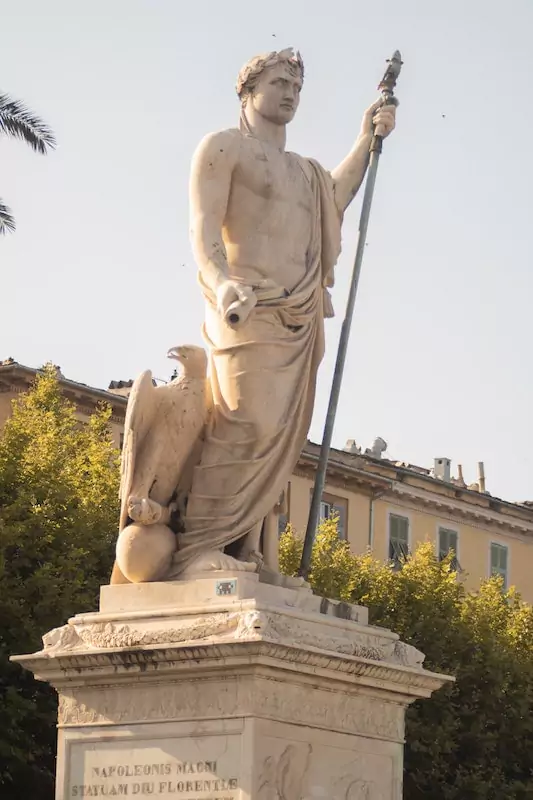
In Ajaccio, Napoleon's birthplace, the Maison Bonaparte is now a museum, and the Palais Fesch holds the cardinal's collection of Italian painting. In Bastia, walk from the old port through the Terra Vecchia to the citadel of Terra Nova. In the south, Palombaggia beach, near Porto-Vecchio, has the white sand and pine-backed water that make the island's reputation.
Give Corsica time. Mountain roads are slow, and the island rewards stopping: the protected waters of the Cap Corse and Agriate marine park in the north, villages where chestnut flour goes into bread, cakes and polenta, and the island's cured meats and sheep's cheeses. Plan with Corsica's official tourism site.

2. Molène, Brittany, where the cars stop
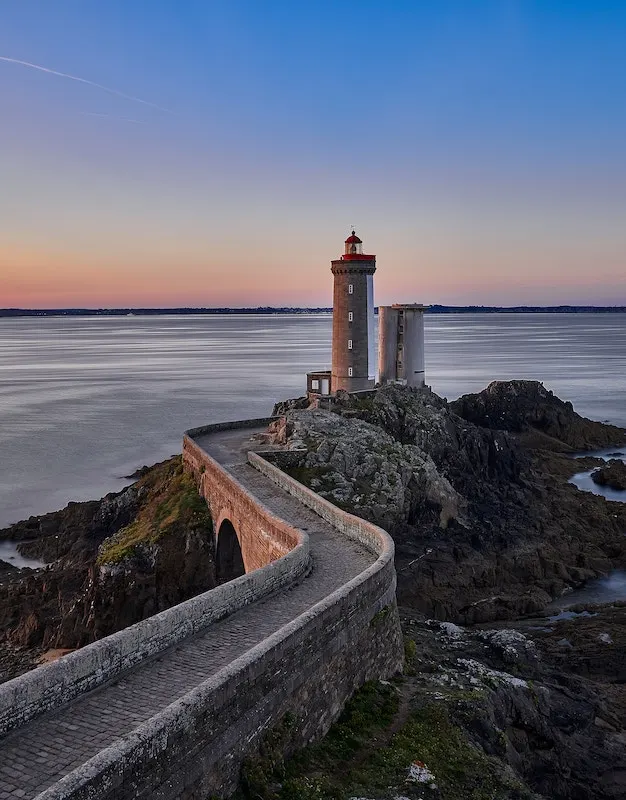
Off the western tip of Brittany, the island of Molène has almost no cars. You reach it by boat from Le Conquet or Brest, and you walk everywhere. It lies in the Iroise biosphere reserve, recognized by UNESCO in 1988, home to seabird colonies, grey seals and bottlenose dolphins.
These waters are dangerous for ships. In 1896 the British liner Drummond Castle sank nearby with the loss of more than 200 lives; the islanders recovered and buried the dead, and a small museum and the cemetery remember them. Nearby Ouessant (Ushant in English) is bigger and easy to explore by bike, with lighthouses on land and at sea. Eat Breton crêpes before you take the boat back. Boat times and lodging are on Brittany Tourism's Ushant and Molène page.

3. The Var hinterland, Provence without the coast
Between the beaches of the Var and the Verdon, the hill villages of the arrière-pays varois see a fraction of the coast's visitors. Three to start with:
- Collobrières, in the chestnut and cork-oak forests of the Massif des Maures, is the place to buy marrons glacés and chestnut cream, and a base for hiking in the forest.
- Aiguines sits above the Lac de Sainte-Croix at the mouth of the Gorges du Verdon, with a château whose towers wear glazed coloured tiles. Kayak, climb or hike the canyon from here.
- Entrecasteaux is a stone village below a large château, with narrow lanes and a formal garden.
Read our colourful guide to Provence for the rest of the region.

4. Vichy and the Auvergne volcanoes
Vichy, in the Auvergne in central France, is a 19th-century spa town of parks, villas and colonnades. In 2021 UNESCO inscribed it among the Great Spa Towns of Europe. The town's name is also tied to darker history: from 1940 to 1944 it was the seat of Pétain's collaborationist government. Today the main sight is the Grand Établissement Thermal, built at the start of the 20th century, whose domes are covered in colourful tiles.
Around Vichy, the medieval fortress of Billy stands above the Allier, and the Sioule gorges offer hiking and kayaking. Farther south, the Auvergne is volcano country: at Lemptégy you can walk into a volcano opened up by quarrying, and in Clermont-Ferrand the Romanesque basilica of Notre-Dame-du-Port is a UNESCO site on the Way of St. James. Plan with Vichy's tourism site.

5. Villefranche-sur-Mer, the Riviera's deep harbour
Just east of Nice, Villefranche-sur-Mer sits on one of the deepest natural harbours on the Mediterranean, which is why cruise ships anchor in its bay. The 16th-century Citadelle Saint-Elme now holds the town hall and small museums, including one devoted to the sculptor Antoniucci Volti. Down by the water, the fishermen's Chapelle Saint-Pierre was decorated by Jean Cocteau in the 1950s with scenes of the saint and of local fishermen. Trains run along the coast from Nice in a few minutes; see the Villefranche tourist office and our guide to exploring the French Riviera.

6. Théoule-sur-Mer and the red rocks of the Esterel
West of Cannes, Théoule-sur-Mer is where the Esterel massif's red volcanic rock meets the sea in small coves. Swim, sail or take a trail up into the Esterel hills. From Cannes, a short ferry crosses to the Île Sainte-Marguerite, where the Fort Royal held the Man in the Iron Mask, the unnamed prisoner of Louis XIV; the island's pine woods and rocky shore make it a good half-day. Plan with the Théoule-sur-Mer tourist office.

7. The Côte Bleue, where Marseille goes to swim
West of Marseille, the Côte Bleue is a string of small ports and calanques that the Marseillais keep for themselves: Niolon, La Redonne, Méjean, Carry-le-Rouet, Sausset-les-Pins. Much of the sea here is a protected marine park. Filmmakers love it, from Marcel Pagnol to Robert Guédiguian. In winter, Carry-le-Rouet celebrates sea urchins on the quay. A little inland, around the Étang de Berre, the Roman Pont Flavien at Saint-Chamas and the archaeological site of Saint-Blaise make a detour for history lovers.

8. The Bénou plateau, Pyrenees
In the Ossau valley in Béarn, close to the Spanish border, the Bénou plateau is high summer pasture for sheep, cows and horses. Walk to its cromlechs, prehistoric stone circles, or climb the nearby summits; in winter, snowshoe it. Higher up the valley, the Artouste tourist train runs along a narrow-gauge line at about 2,000 metres to the Artouste lake in summer; check its season before you go. Lac de Castet, lower down, has boats and paddleboards for hire.

9. Hossegor, surf and pine forest
North of Biarritz on the Landes coast, Hossegor is France's best-known surf town, with powerful beach breaks such as La Gravière and La Nord that draw surfers from around the world. Off the beach, the Barthes wetlands have walking trails for birdwatching, the saltwater Lac d'Hossegor has calm beaches for families and paddleboarders, and behind it all stretches the Landes forest, one of the largest planted forests in Europe, once tapped for resin. Plan with the Hossegor tourist office.

10. Porquerolles, an island by bike
The largest of the Îles d'Hyères, Porquerolles is car-free for visitors: you rent a bike or walk. Most of the island is protected as part of the Port-Cros national park, with cliffs on the south side and sandy beaches like Notre-Dame and La Courtade on the north. The national botanical conservatory keeps orchards of old fruit varieties and olive trees. Next door, Port-Cros has an underwater snorkelling trail off La Palud beach. Back on the mainland, Hyères has a medieval old town and the ruins of the Greek trading post of Olbia.

Plan your visit
None of these places is hard to reach, but most reward a car and an extra day. Islands need booking in summer: ferries to Molène, Ouessant and Porquerolles fill in July and August, and Porquerolles limits daily visitor numbers at peak times. Spring and early autumn suit everything on this list except the Bénou plateau in deep winter and Hossegor's biggest swells. Pick one, check its tourist office for current schedules, and use our free France travel guides to build the rest of the route. More destinations are in Roam.

French and based in Vancouver since 2014, Julien Mainguy is the co-founder of Best of France. Passionate about the cultural difference between Canada and Europe, he is leading numerous projects to create awareness, help people grow, and bring communities together.