


French and based in Vancouver since 2014, Julien Mainguy is the co-founder of Best of France. Passionate about the cultural difference between Canada and Europe, he is leading numerous projects to create awareness, help people grow, and bring communities together.


The Art of Provençal Living
Aix-en-Provence (locally known simply as "Aix") embodies everything romantic about southern France while avoiding the tourism overwhelm that plagues coastal destinations. This university city of 145,000 residents maintains an authentic rhythm of daily life where students debate philosophy over espresso, elderly residents argue market prices, and everyone agrees that life should be savoured, not rushed.
The city's relationship with Paul Cézanne, who was born here in 1839 and spent most of his life capturing the surrounding landscape on canvas, infuses Aix with artistic credibility that transcends typical tourist appeal. Walking streets the artist knew intimately, viewing Mont Sainte-Victoire from angles he painted obsessively, and visiting his preserved studio creates connections between art and place that feel immediate and profound.

But Aix offers far more than Cézanne pilgrimage. The historic center's elegant architecture, spanning Roman ruins through Belle Époque grandeur, creates consistently beautiful streetscapes. Over 100 fountains give the city its nickname "City of a Thousand Fountains," their splashing water providing acoustic backdrop to daily life. The vibrant cultural scene—festivals, concerts, museums, galleries—keeps the atmosphere intellectually engaged and perpetually interesting.
Cours Mirabeau: The Heart of Elegance
The Cours Mirabeau functions as Aix's living room—a grand tree-lined boulevard where the city's social life unfolds beneath towering plane trees that create a natural cathedral of dappled shade. This 440-meter avenue, laid out in 1649, represents French urban planning at its most successful, creating public space that encourages lingering, conversation, and the art of people-watching.
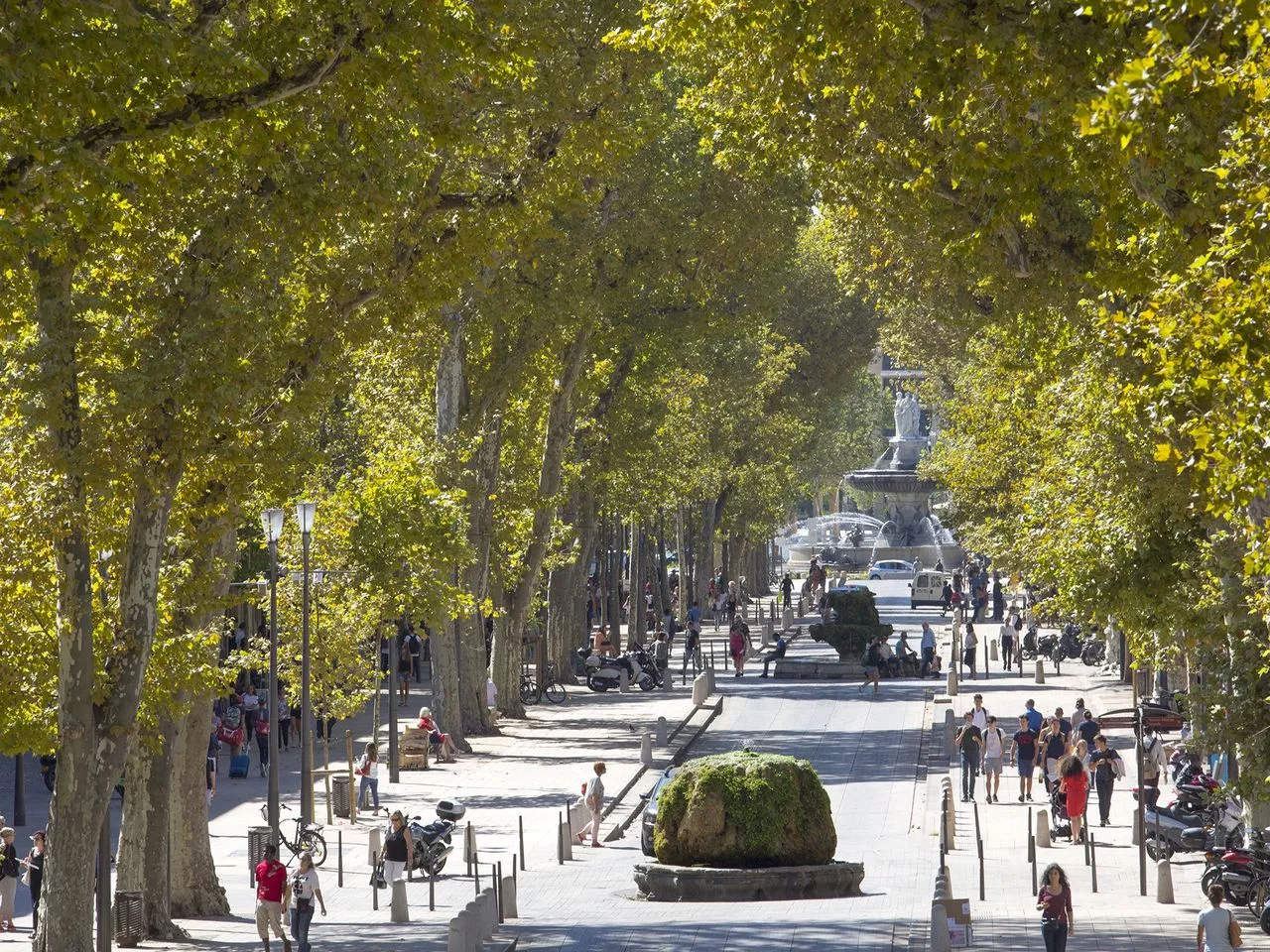
The boulevard divides old Aix into two distinct quarters: the Quartier Mazarin to the south, with its geometric streets and aristocratic hôtels particuliers, and the medieval Vieil Aix to the north, where narrow streets twist through the historic core. This division creates architectural variety within short walking distances, each side offering different atmospheres and discoveries.
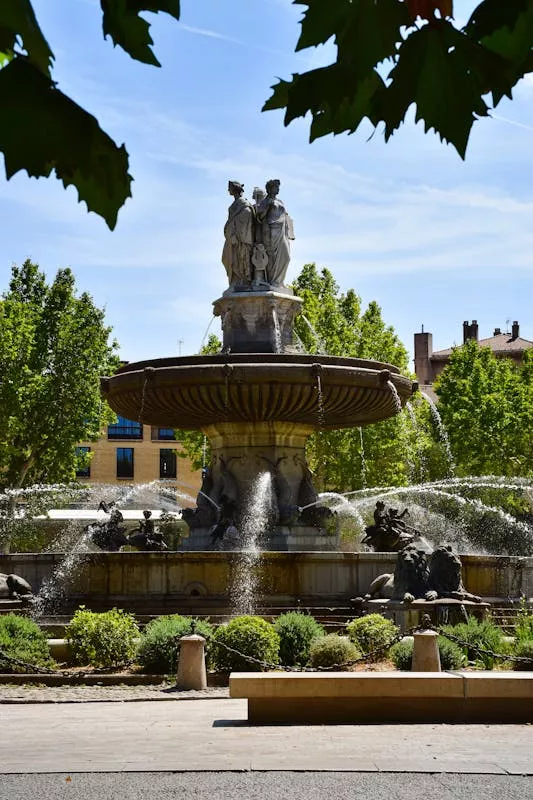
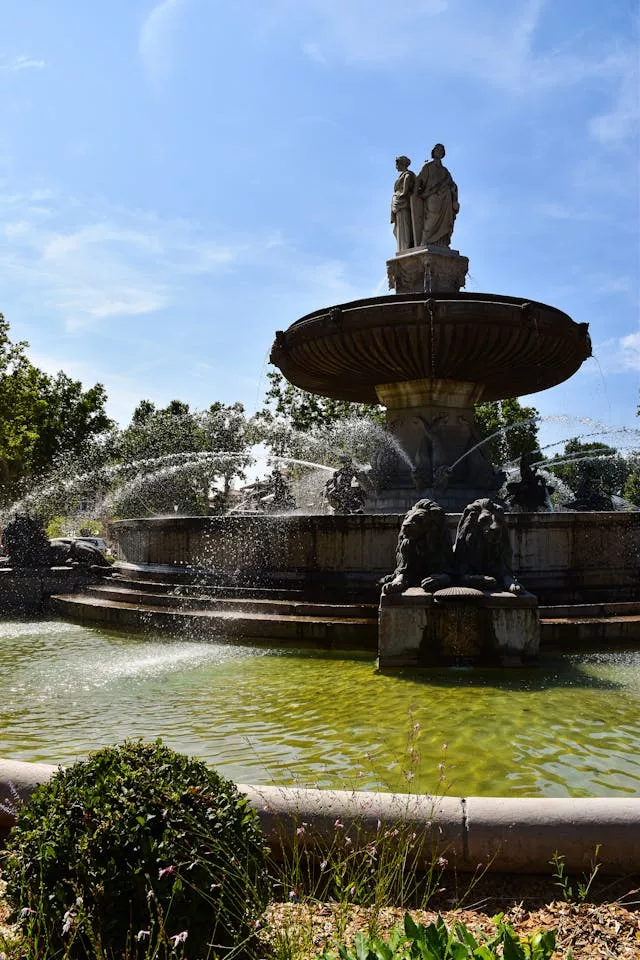
Four monumental fountains punctuate the Cours Mirabeau, the most famous being the Fontaine de la Rotonde at the western entrance—a massive 19th-century fountain crowned by three figures representing Justice, Agriculture, and Fine Arts. The warm, moss-covered Fontaine d'Eau Chaude (Hot Water Fountain) in the middle of Cours Mirabeau still flows with naturally heated thermal water at 18°C (64°F), a reminder of the Roman baths that first made this location significant.
The café culture along Cours Mirabeau deserves its legendary status. Les Deux Garçons, opened in 1792, has served everyone from Cézanne and Émile Zola to Picasso and Camus. While touristy now, its Belle Époque interior and terrace position make it worth experiencing at least once. More authentic options abound on side streets where locals gather away from the boulevard's premium prices.
Cézanne's Aix: Following the Master's Path
Paul Cézanne's presence permeates Aix, from bronze "C" markers embedded in sidewalks that trace a walking route through locations significant to his life, to the mountain that dominated his artistic vision for decades. Understanding Cézanne deepens appreciation for Aix and vice versa—the two remain inseparably connected.
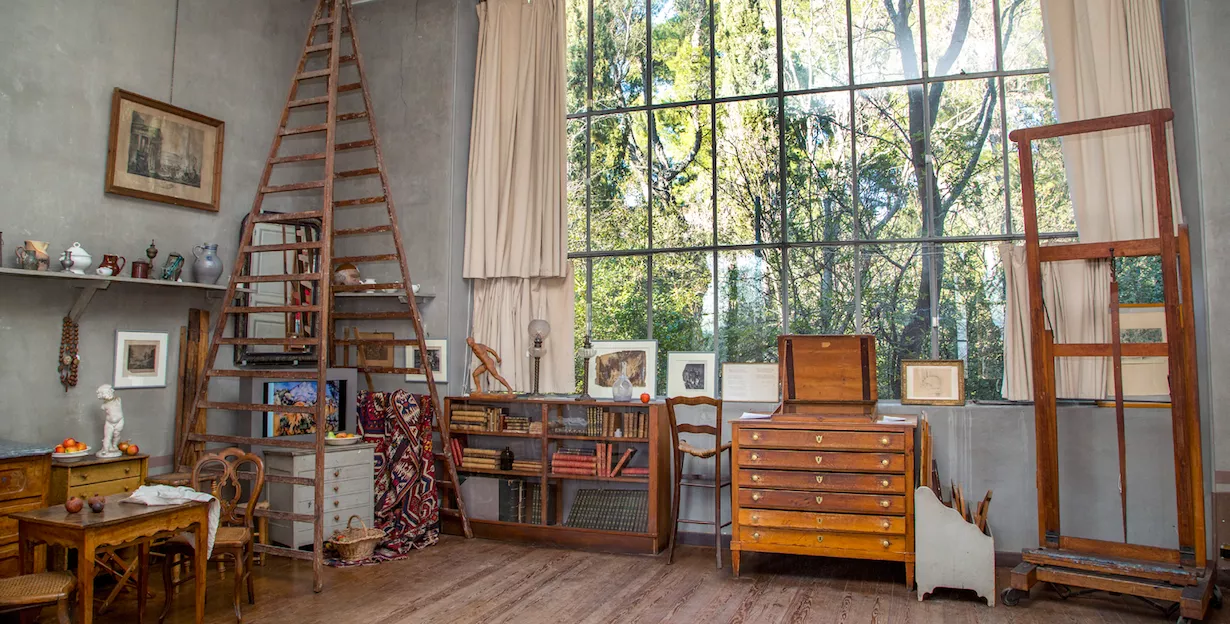
The Atelier Cézanne (Cézanne's Studio), preserved exactly as he left it in 1906, offers intimate connection to the artist's working life. His easel, paint tubes, still-life objects, and personal effects remain arranged as if he might return any moment. The studio's north-facing windows flood the space with even light that allowed precise colour work. This modest building reveals more about Cézanne's methodical approach to painting than any museum exhibition could convey. Visit the official Cézanne sites to plan your artistic pilgrimage.
The Terrain des Peintres (Painters' Field), a hillside viewpoint where Cézanne painted some of his greatest landscapes, offers the same vista of Mont Sainte-Victoire that obsessed the artist. Standing here, you understand why he returned repeatedly to this motif—the mountain's form changes dramatically with shifting light and seasons, eternally fascinating yet impossible to definitively capture.
The Musée Granet houses several Cézanne paintings alongside works by artists he influenced and was influenced by, providing art historical context. The museum's collection spans archaeological artifacts through contemporary art, but Cézanne remains the star attraction. The adjacent Chapelle des Pénitents Blancs hosts rotating exhibitions often focused on modern and contemporary art.
The Jas de Bouffan, Cézanne's family estate where he painted during his early career, offers tours by reservation. The property, beautifully restored, shows where Cézanne developed his revolutionary approach to landscape and still life before fully embracing the radical style that would change art history.
Markets: The Rhythm of Daily Life
Aix's markets provide essential immersion into authentic Provençal culture, where quality ingredients, seasonal eating, and the social ritual of shopping remain central to daily life. These aren't primarily tourist attractions but functioning marketplaces where locals maintain generations-old shopping patterns.
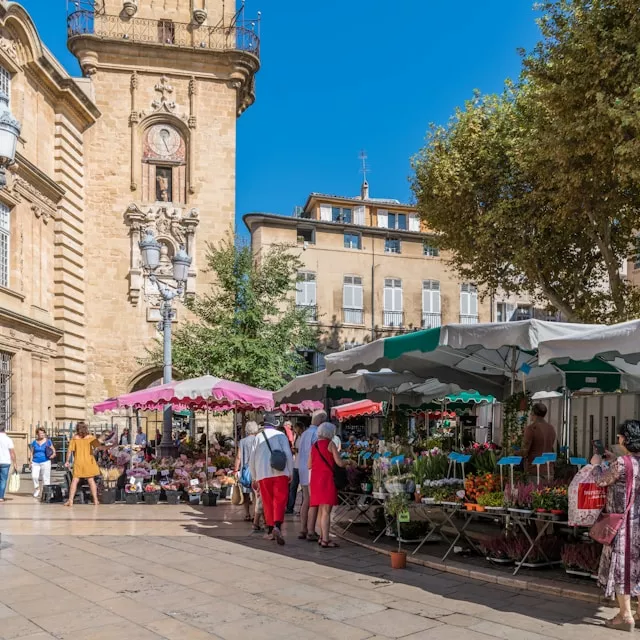
The Place des Prêcheurs market operates Tuesday, Thursday, and Saturday mornings, filling a beautiful square with produce stalls, flower vendors, and specialty food sellers. Local farmers bring vegetables harvested that morning, their freshness and flavour surpassing anything found in supermarkets. The market's atmosphere—vendors calling out specials, shoppers examining tomatoes with critical eyes, the scent of fresh herbs and ripe melons—captures Provençal life at its most authentic.
The flower market along Cours Mirabeau (Tuesday, Thursday, and Saturday) transforms the boulevard into a fragrant garden. Roses, lavender, sunflowers, and seasonal blooms create colourful displays that epitomize Provence's abundance. Even if you're not buying, walking through the flower stalls provides sensory delight and countless photo opportunities.
The daily food market at Place Richelme, operating every morning except Monday, specializes in local produce, honey, tapenade, herbs, and prepared foods. This smaller market caters primarily to locals doing daily shopping, offering opportunities to observe French market culture in action. The square itself, surrounded by ochre buildings and the town hall clock tower, provides a quintessentially Provençal setting.
Artisan markets on various days feature local crafts, pottery, textiles, and handmade goods. The antiques and brocante market (Tuesday and Saturday at Place de Verdun) attracts collectors hunting for treasures among vintage linens, old books, antique furniture, and curiosities that tell stories of previous owners.
The Old Town: Medieval Maze
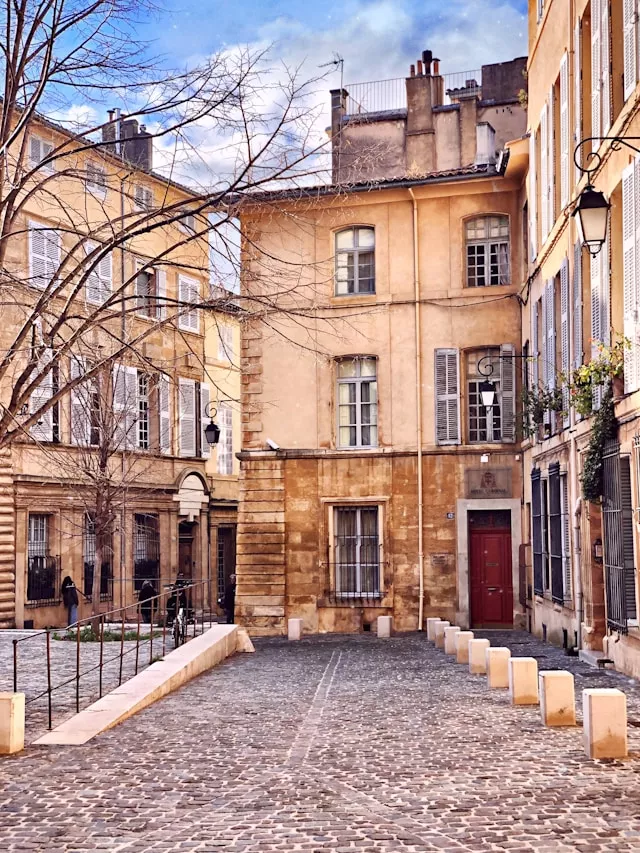
The Vieil Aix (Old Aix) north of Cours Mirabeau reveals the city's medieval bones through narrow streets, hidden squares, and architectural details spanning centuries. Getting intentionally lost here ranks among Aix's greatest pleasures—every corner reveals boutiques, galleries, or cafés worth exploring.
The Cathédrale Saint-Sauveur represents an architectural time capsule, with elements from every period between the 5th and 18th centuries. The mismatched Gothic facade leads to interiors revealing Roman columns, medieval cloisters, and baroque chapels. The cathedral houses the Triptych of the Burning Bush, a 15th-century masterpiece by Nicolas Froment that depicts the Virgin and Child appearing to Moses. The peaceful Romanesque cloister, with its carved columns and tranquil atmosphere, provides respite from the bustling streets.
Place de l'Hôtel de Ville fronts the impressive 17th-century town hall with its beautiful courtyard. The square hosts daily markets and serves as a gathering point for festivals and celebrations. The adjacent former corn exchange with its classical colonnade now houses temporary art exhibitions.
Hidden throughout Vieil Aix, numerous hôtels particuliers (aristocratic townhouses) reveal grand doorways, carved details, and glimpses into elegant courtyards. Many now house government offices, museums, or private apartments, but their facades showcase the wealth and artistic patronage that flourished during Aix's golden age as capital of Provence.
Fountains: Water Music Throughout the City
Aix's reputation as the "City of a Thousand Fountains" isn't mere marketing hyperbole—over 100 fountains dot streets and squares, their flowing water creating a distinctive acoustic signature. This abundance reflects the thermal springs and underground water sources that made this location attractive since Roman times.
The Fontaine des Quatre Dauphins (Four Dolphins Fountain), built in 1667, anchors the charming Place des Quatre Dauphins in the Quartier Mazarin. This baroque fountain featuring four dolphins supporting a central pedestal creates one of Aix's most photogenic scenes, especially framed by the surrounding ochre and pink buildings.
The Fontaine d'Eau Chaude on Cours Mirabeau, built in 1734, flows with naturally thermal water emerging at 18°C. Its moss-covered stone and continuous warm water create a unique fountain experience—you can actually feel the warmth if you place your hand in the water (though drinking it isn't recommended).
The massive Fontaine de la Rotonde, constructed in 1860, dominates the Place de Gaulle entrance to the old town. Three bronze statues crown this Second Empire fountain representing Justice (facing Cours Mirabeau), Agriculture (facing Marseille), and Fine Arts (facing Avignon). Evening illumination transforms it into dramatic spectacle.
Smaller fountains appear throughout residential neighbourhoods—some simple wall fountains, others elaborate carved stone affairs, each adding water's music to daily life. Hunting for fountains becomes an enjoyable way to explore residential areas tourists typically miss.
Culinary Traditions and Innovations
Aix's culinary scene balances traditional Provençal cooking with contemporary innovation, reflecting the city's dual character as historic capital and university town. The quality of ingredients from surrounding countryside elevates even simple preparations to memorable meals.

Calissons d'Aix represent the city's signature sweet—diamond-shaped confections made from ground almonds, candied melon, and orange peel, topped with royal icing. These delicate treats have been produced here since the 15th century. Confiserie du Roy René and Léonard Parli maintain traditional production methods, offering factory tours and tastings. These make excellent gifts that actually represent local craftsmanship rather than generic souvenirs.
Local markets overflow with Provençal specialties: tapenade (olive paste), anchoïade (anchovy spread), herbes de Provence, lavender honey, and exceptional olive oils from nearby mills. Picholine olives from the surrounding countryside have protected origin status (AOP), prized for their crisp texture and nutty flavor.
Restaurant scene ranges from Michelin-starred establishments to humble bistros. Le Formal offers refined modern French cuisine in an intimate setting. La Tomate Verte serves inventive vegetarian dishes that attract even committed carnivores. Chez Féraud provides authentic Provençal cooking at reasonable prices in a convivial atmosphere unchanged for decades. For dining recommendations and reservations, consult the official Aix tourism site.
The wine culture emphasizes Provençal rosés, which complement the region's cuisine perfectly. Côtes de Provence rosés from surrounding vineyards—light, dry, and endlessly refreshing—dominate wine lists and market stalls. Wine bars like Le Petit Verdot offer extensive selections with knowledgeable staff guiding explorations of regional vintages.
Festivals: A City Celebrating Culture
Aix's festival calendar reflects the city's commitment to arts and culture, with events spanning classical music to contemporary performance attracting international audiences while maintaining local character.
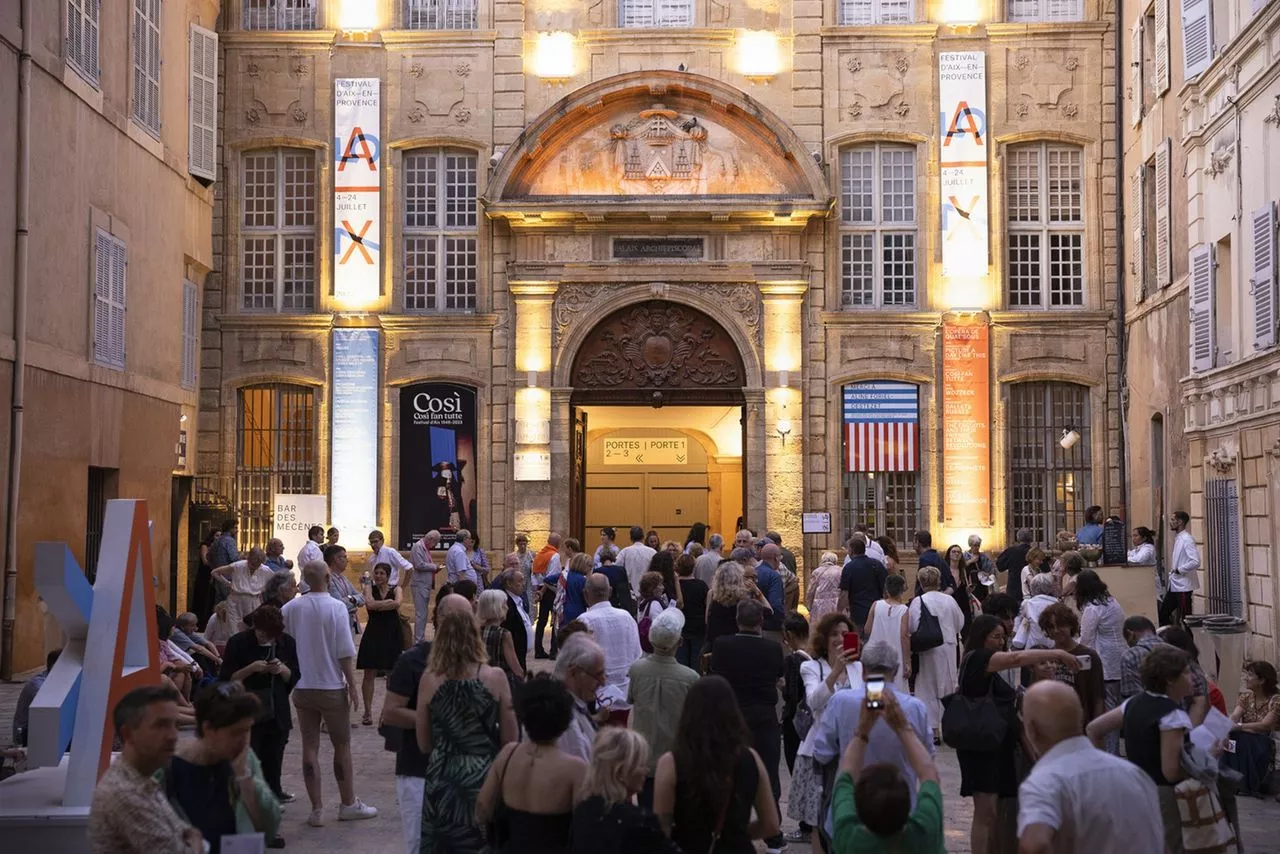
The Festival d'Aix-en-Provence, founded in 1948, ranks among Europe's most prestigious opera festivals. Each July, world-class productions take over venues throughout the city, from the outdoor Théâtre de l'Archevêché to contemporary performance spaces. The festival atmosphere transforms Aix, with opera lovers from worldwide mixing with locals in cafés and restaurants between performances. Learn more at the festival's official website.
The Festival Tous Courts each December celebrates short films, screening hundreds of works from emerging and established filmmakers. This more accessible festival creates opportunities to discover cinema's cutting edge in intimate venues.
Various music festivals throughout summer fill churches, squares, and gardens with performances ranging from Baroque to jazz. The Festival de Pâques (Easter Festival) brings classical music to venues throughout the city each spring.
The Christmas markets in November and December transform Place de l'Hôtel de Ville and surrounding squares with wooden chalets selling regional products, crafts, and seasonal treats. The market's atmosphere—mulled wine, roasted chestnuts, holiday lights—creates festive ambiance without the overwhelming crowds of larger city markets.
University Town Energy
Aix-Marseille University, with roots dating to 1409, maintains a significant presence that keeps the city youthful and intellectually engaged. Over 70,000 students study here, their energy infusing neighbourhoods with affordable restaurants, lively bars, bookshops, and the animated conversations that characterize university towns worldwide.
The student population ensures Aix avoids the museum-like atmosphere that can afflict purely historic destinations. Cafés fill with students debating ideas over coffee that lasts hours. Affordable ethnic restaurants reflect diverse student tastes. Street performers and buskers activate public spaces. This young energy balances the elegance and tradition, creating a city that feels both refined and vital.
The librairies (bookshops) reflect this intellectual culture. Book in Bar combines bookshop and café, hosting readings and discussions. Librairie Goulard specializes in art books and exhibition catalogs. Used bookshops along narrow streets offer treasures for browsers patient enough to search dusty shelves.
Practical Information for Visitors
Aix's strategic location makes it easily accessible while serving as an excellent base for exploring Provence. The city lies 30 kilometers north of Marseille (30 minutes by bus or train), 80 kilometers from Avignon, and 165 kilometers from Nice, positioning it centrally for regional exploration.
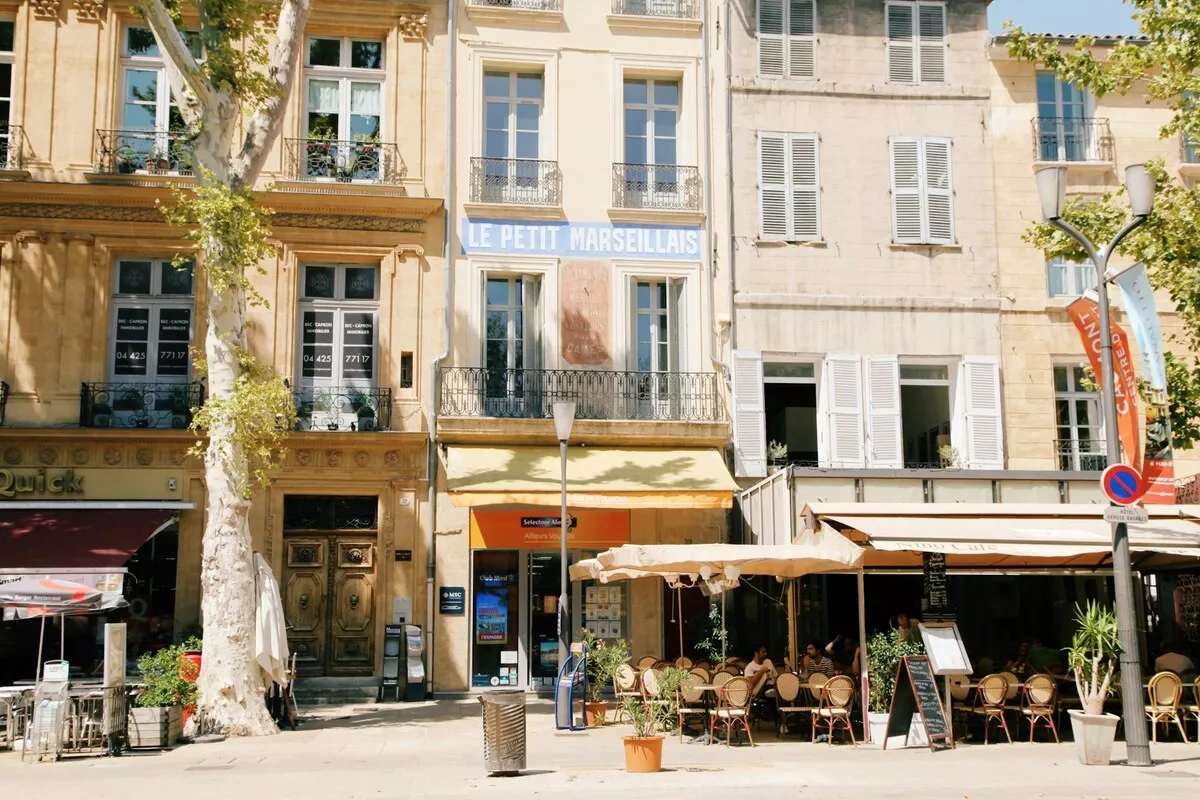
The historic center remains entirely walkable, with most attractions within 15-minute walking distance of each other. The compact size encourages wandering and serendipitous discovery rather than rigid itinerary following. Comfortable shoes prove essential for cobblestone streets and occasional hills.
Accommodation ranges from luxury spa hotels to budget options. Hôtel Cézanne occupies a beautifully restored building near Cours Mirabeau, offering contemporary comfort with historic details. Villa Gallici, a Relais & Châteaux property, provides Provençal luxury with gardens and exceptional service. Numerous chambres d'hôtes in the old town offer authentic experiences at moderate prices. For accommodation options, browse Booking.com's Aix listings.
Best visiting times span April through October, though each season offers advantages. Spring (April-May) brings mild weather, blooming landscapes, and manageable crowds. Summer (June-August) offers warm temperatures perfect for outdoor dining and fountain-side lingering, plus festival programming, though this represents peak tourist season. Autumn (September-October) provides ideal conditions—warm days, harvest season, and thinning crowds. Winter brings crisp weather, Christmas markets, and hotel bargains, though some attractions reduce hours.
The local bus system efficiently connects neighborhoods and parking areas, though walking remains the best way to experience the old town. Vélos (bike rentals) work well for reaching Cézanne's studio or exploring neighborhoods beyond the center.
Day Trips: Exploring Provence
Aix's central position makes it ideal for exploring Provence's diverse attractions while returning each evening to comfortable, familiar accommodations. The surrounding region offers enough variety for week-long stays without repeating experiences.
Marseille (30 minutes away) provides urban contrast with its gritty Mediterranean port atmosphere, North African influences, and spectacular Calanques National Park offering dramatic coastal hiking. The city's MuCEM (Museum of European and Mediterranean Civilizations) ranks among France's finest modern museums. Explore Marseille further through France's official tourism portal.
Lourmarin and other Luberon villages—Gordes, Roussillon, Ménerbes—showcase quintessential Provençal hill town charm within an hour's drive. Stone houses, lavender fields, vineyards, and panoramic views create the Provence of imagination and postcards.
Arles (80 kilometers west) offers extraordinary Roman ruins including an intact amphitheater, plus connections to Van Gogh who painted many masterpieces here during his troubled final years. The city's Fondation Vincent van Gogh presents rotating exhibitions exploring the artist's legacy and influence.
Cassis (40 kilometers south) combines a charming fishing port with access to the stunning Calanques—fjord-like inlets with turquoise water and white limestone cliffs. Boat tours and hiking trails reveal this protected coastline's spectacular beauty.
The Montagne Sainte-Victoire, Cézanne's obsession, offers hiking trails with views spanning Provence. The mountain's distinctive profile, changing dramatically with atmospheric conditions, explains why Cézanne returned to this subject throughout his career.
Why Aix Captivates
Aix succeeds where many historic cities struggle—maintaining authentic daily life while welcoming visitors graciously. This isn't a preserved monument but a living city where residents work, study, shop, and socialize much as previous generations did, just with smartphones and modern conveniences.
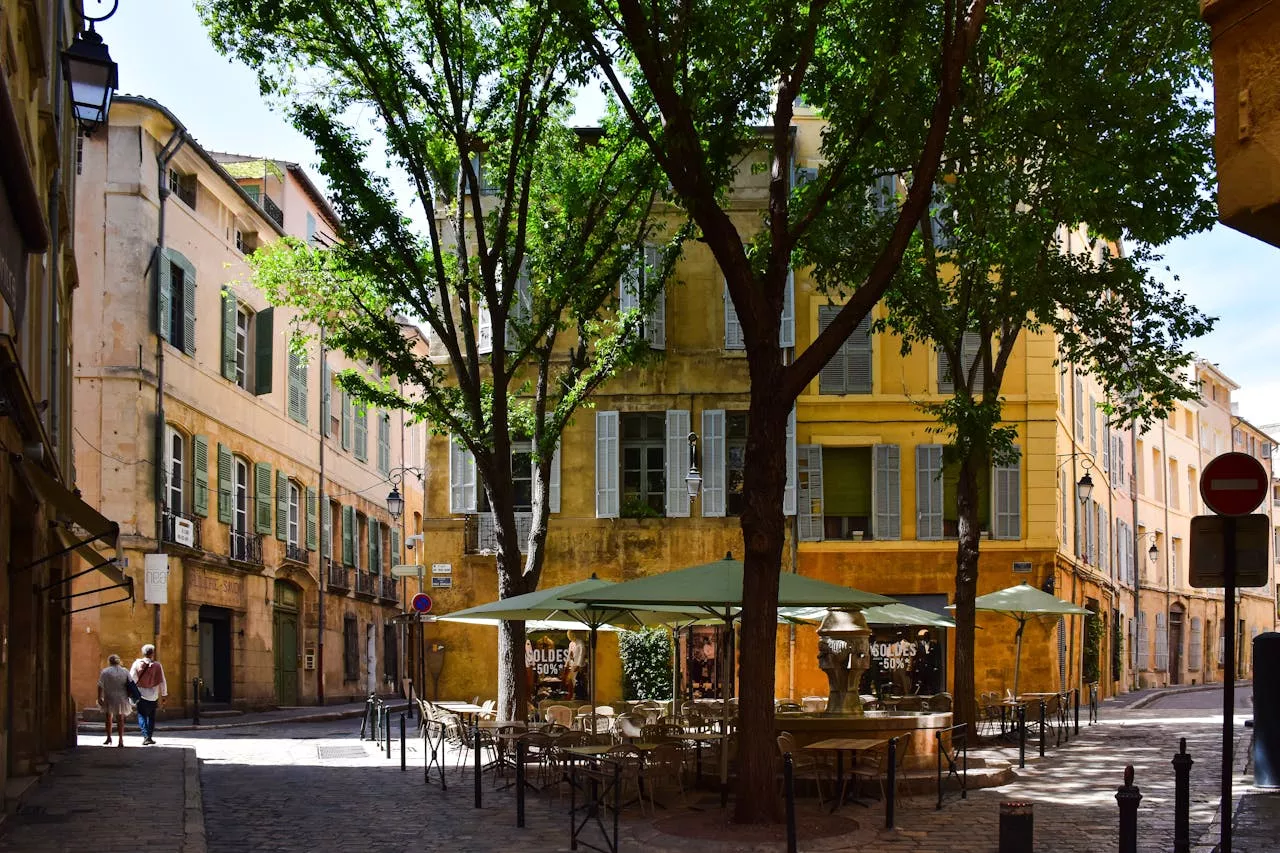
The city's scale promotes human interaction over automotive efficiency. Streets encourage walking and lingering. Fountains provide gathering points and acoustic beauty. Markets maintain social shopping traditions that supermarkets can't replicate. This thoughtful urbanism, much of it inherited rather than planned, creates environments that enhance daily life rather than merely accommodating it.
Perhaps most appealing, Aix has avoided the over-tourism devastating more famous Provençal destinations. You can still find uncrowded museums, restaurant tables without advance reservations, and streets where locals outnumber tourists—increasingly rare qualities in popular French cities. The city works hard to preserve this balance, understanding that authenticity represents its greatest asset.
For travellers seeking the essence of Provençal life—elegant but not pretentious, cultured but not stuffy, historic but not frozen—Aix delivers experiences that feel genuine rather than performed. This former capital of Provence proves that the region's most rewarding destination might not be coastal but rather this sophisticated inland city where art, history, and the good life blend seamlessly under the Provençal sun.