
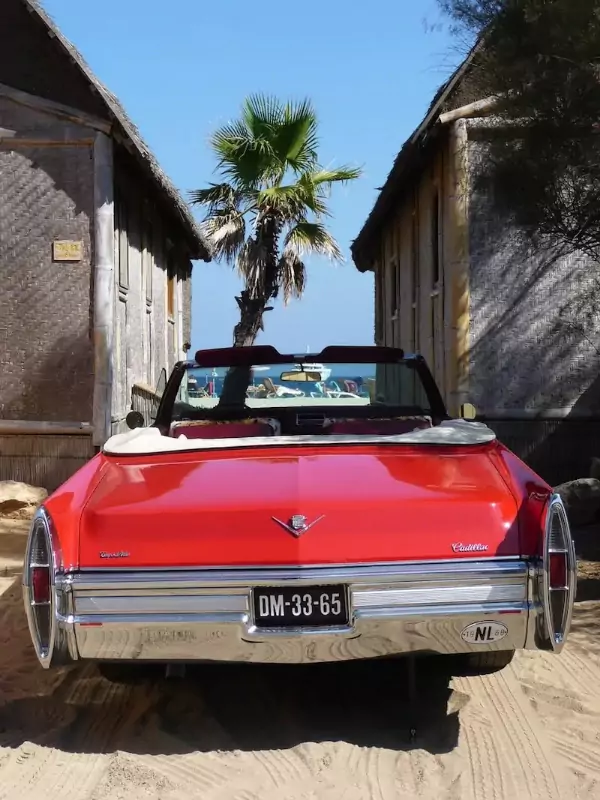

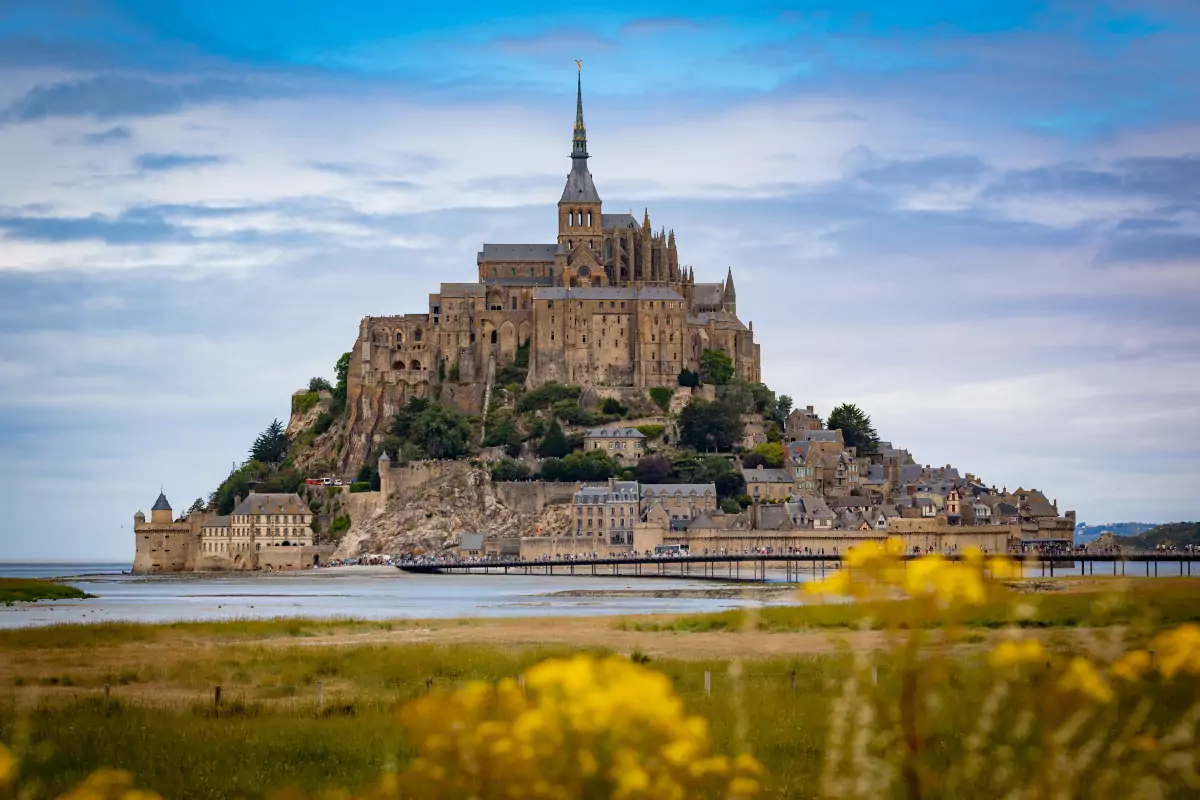
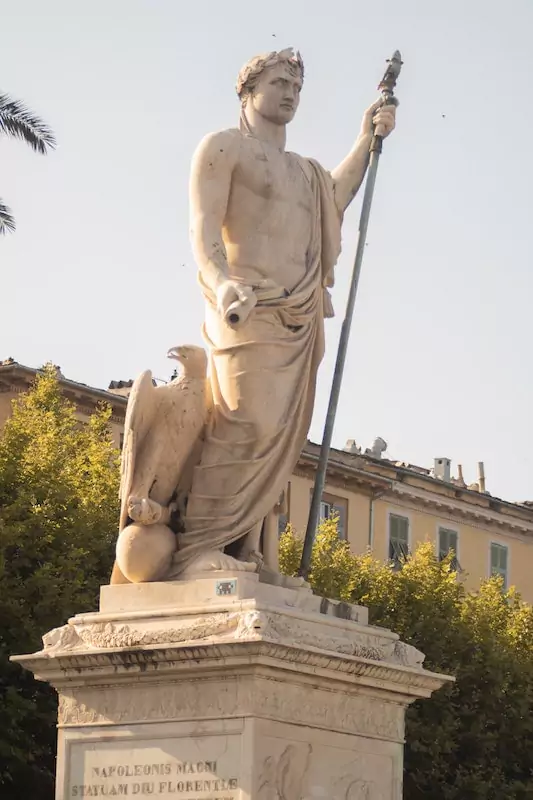


The Côte d'Azur got its name from a book. In 1887 the poet Stéphen Liégeard titled his guide to the coast between Hyères and Menton La Côte d'Azur, after the colour of the sea, and the name stuck. English speakers borrowed "Riviera" from the Italian coast next door. Since then the shore has drawn British aristocrats in winter, painters in search of light, and in 1956 Brigitte Bardot, whose film turned a fishing port called Saint-Tropez into a byword for summer. This guide covers the stretch most Canadians mean when they say "the Riviera", from Marseille to Monaco, and what each place is actually good for.
Where the Riviera starts and ends
There is no official border. Strictly, the Côte d'Azur runs from around Saint-Tropez or Hyères east to Menton and the Italian border, with Nice as its capital. Marseille and the Calanques belong to Provence, but they share the same sea and sit on the same train line, so most trips combine them. Behind the coast, the land climbs fast into the Alps: the Mercantour National Park is about an hour north of Nice.
The climate is the draw: hot, dry summers and mild winters, which is why the British first came in December, not July.

Marseille: France's oldest city, and its second largest
Greek sailors from Phocaea, in what is now Turkey, founded Marseille around 600 BC. The founding legend has one of them, Protis, chosen as husband by Gyptis, the daughter of a local king, who gave the couple the land as a wedding present. With 886,040 residents in 2023, according to INSEE, it is France's second city after Paris. Waves of arrivals shaped it: Corsicans, Italians, Armenians after 1915, Algerians after 1962.

Start at the Vieux-Port, where fishmongers still sell the morning catch on the quai des Belges, then walk to the harbour mouth. Louis XIV built Fort Saint-Jean in the 17th century with its guns facing the town as much as the sea, to keep rebellious Marseille in line.

A footbridge links the fort to the Mucem, the museum of European and Mediterranean civilizations, opened in 2013 in a cube wrapped in a lattice of concrete. The fort's terraces hold the Jardin des Migrations, planted to tell the city's history through the plants that arrived with each wave of people. In the evening, head inland to the Cours Julien, covered in murals and full of bars, or up to the Notre-Dame-de-la-Garde basilica for the view over the whole bay. Order a pastis on a café terrace and you will fit right in.
Then get out on the water or onto the trails of the Calanques, the limestone inlets that run about 20 km from Marseille to La Ciotat, protected since 2012 as a national park (Marseille tourist office). In summer, trails can close on days of high fire risk, so check the national park's website the evening before you go. Closer to town, the little coves of Malmousque and the Anse de la Fausse Monnaie are where locals swim off the rocks.

Cannes: the festival town has an old quarter too
Cannes is busiest for two weeks every May, when the film festival takes over the Palais des Festivals at the end of the Croisette. Outside festival time you can walk the steps of the red carpet like anyone else. The Croisette, the seafront boulevard lined with palace hotels and designer boutiques, is best early in the morning, before the private beach clubs set out their loungers; the public beaches are at either end of it.

For the older Cannes, climb into Le Suquet, the hill above the old port where the fishing village began. Its lanes lead to a medieval tower and the Musée des Explorations du Monde, with one of the best views on the coast. In the old port below, the Marché Forville is the place for breakfast. If you would rather watch the films than the stars, our list of 13 French films every Francophile should see is a start.

Monaco: a separate country in a few square kilometres
Monaco is not France. It is an independent principality, the second-smallest state in the world after the Vatican, ruled by the Grimaldi family since the 13th century. Its old town, Monaco-Ville, sits on Le Rocher (the Rock), with the Prince's Palace and the cathedral where Grace Kelly is buried. Below, Monte-Carlo has the casino and the hotels, and the Formula 1 Grand Prix runs through the streets every spring. The Jardin Exotique on the cliffs above gives the widest view over the principality and the sea.

Saint-Tropez: the fishing port Bardot made famous
Saint-Tropez is a small town on a peninsula that is slow to reach: there is no train, and the single road in jams solid in July and August. That isolation is why painters found it first. Paul Signac arrived by boat in 1892 and stayed, and friends such as Matisse and Bonnard followed. Their work hangs in the Musée de l'Annonciade, a former chapel on the port, which is the best reason to come outside summer.

Then came the cinema. Roger Vadim filmed Et Dieu… créa la femme (And God Created Woman) here with Bardot in 1956, the yachts followed, and in 1971 Mick Jagger married Bianca Pérez-Mora Macías at the town hall. The fishing port is still there under the yachts: go early in the morning, walk out along the harbour wall, and buy a slice of tarte tropézienne, a brioche filled with cream, created here in the 1950s.

After the market on the Place des Lices, where old men play pétanque under the plane trees, climb to the 17th-century citadel for the view across the gulf. In high summer, consider coming by ferry from Sainte-Maxime or Saint-Raphaël instead of by car.
The Lérins Islands: 15 minutes from Cannes
The two main Lérins Islands are about 15 minutes by boat from the port of Cannes, and they are the coast's best escape from the crowds. There are no cars, only pine and eucalyptus woods, footpaths and small rocky beaches.

Sainte-Marguerite, the larger island, is home to the Fort Royal, where the prisoner known as the Man in the Iron Mask was held for 11 years in the late 17th century; you can visit his cell in the fort's museum. Bring a picnic and walk the shoreline path.
Saint-Honorat, the smaller island, belongs to the monks of the Abbaye de Lérins, a monastery whose origins go back to the 5th century. The monks still make wine and liqueurs, sold on the island, and the atmosphere is quiet by design: dress modestly near the abbey.

Plan your visit
- From Canada: Air Canada flies from Montréal to Nice, and plans to add a twice-weekly Toronto to Nice flight from 16 June 2027, according to Fréquence Sud. In summer 2026 Air Transat also launched a weekly Québec City to Marseille flight. Schedules are seasonal, so check the airlines directly.
- From Paris by train: as of November 2026, SNCF lists about 29 trains a day from Paris to Marseille, the fastest in 3 hours 4 minutes (SNCF Connect). Regional TER trains then run along the coast through Cannes, Antibes, Nice and Monaco.
- Getting around: the coastal train is easier than driving between Cannes and Menton. Rent a car only for the hill villages and Saint-Tropez.
- When to go: May, June and September give warm sea and fewer people. In July and August prices and traffic peak, and Cannes hotels are booked out during the May festival.
Liégeard's blue coast is still there once you leave the Croisette: on the path round Sainte-Marguerite, on the rocks at Malmousque, on the harbour wall in Saint-Tropez at 8 am. For a day inland, our guides to Èze, the hilltop village above Monaco and Grasse and its perfume houses pick up where this one stops. Find more trip ideas in our Roam section, and download our free France travel guides before you book.

French and based in Vancouver since 2014, Julien Mainguy is the co-founder of Best of France. Passionate about the cultural difference between Canada and Europe, he is leading numerous projects to create awareness, help people grow, and bring communities together.