
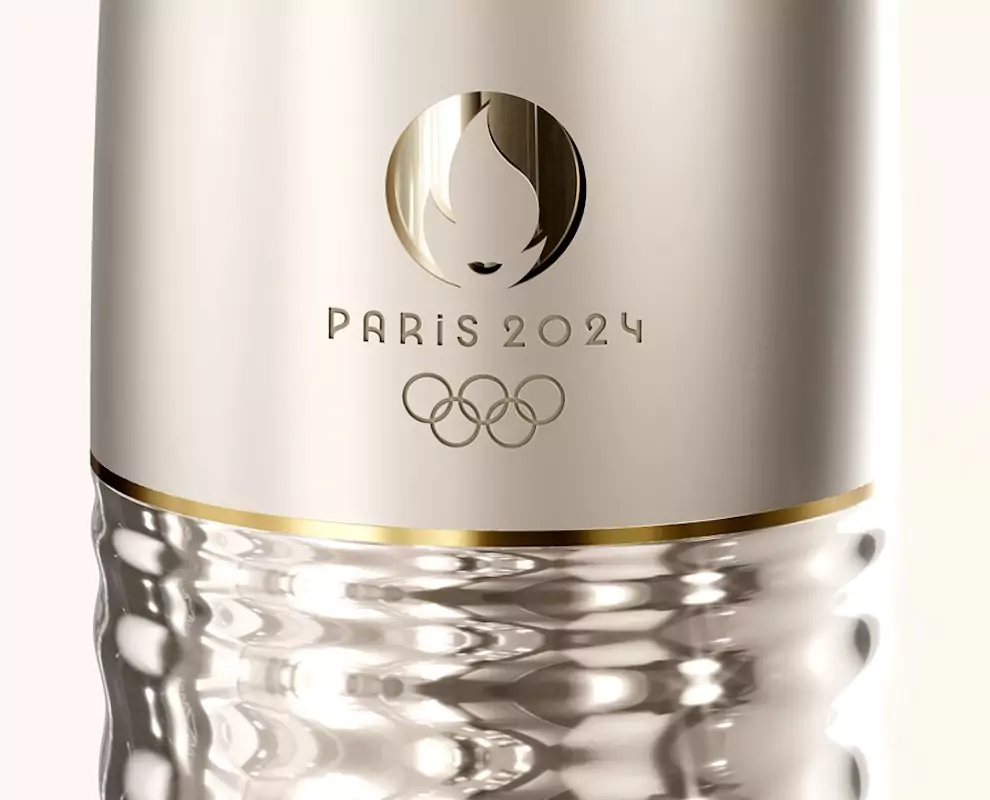



On 8 May 2024 the three-masted Belem sailed into Marseille's Vieux-Port carrying the Olympic flame from Greece. Over the next 68 days of relays, about 10,000 torchbearers carried it through 65 departments and the overseas territories before it lit the cauldron in Paris on 26 July. The relay is over, but its route still reads like a well-planned tour of France: Roman towns, Gothic cathedrals, Atlantic ports and Alpine resorts, one stage town a day. Here is where it went, with the stops worth building a trip around. The official Olympics route preview lists every town it passed through.
May: from the Mediterranean to the Atlantic
Marseille, 8 and 9 May
Marseille was the obvious first stop: the city was founded by Greek sailors from Phocaea around 600 BC, and it hosted the Olympic sailing events. After the arrival in the Vieux-Port, the flame climbed to the basilica of Notre-Dame de la Garde and ended its first full day at the Stade Vélodrome, which also hosted Olympic football. For a first visit, start at the Vieux-Port fish market in the morning and walk up to the basilica for the view over the harbour; our guide to the French Riviera covers the coast east of the city.

Provence and the Languedoc, 10 to 13 May
The relay then worked through the south: Toulon, home of France's main naval base; Manosque, in the Haute-Provence UNESCO Global Geopark; and Arles, the largest commune in metropolitan France by area, where Van Gogh painted in 1888 and 1889 and the Roman amphitheatre still hosts events. Montpellier closed this leg. These four towns sit on the same rail line along the coast, which makes them easy to string together without a car. Our colourful guide to Provence picks the villages in between.
Corsica, 14 May
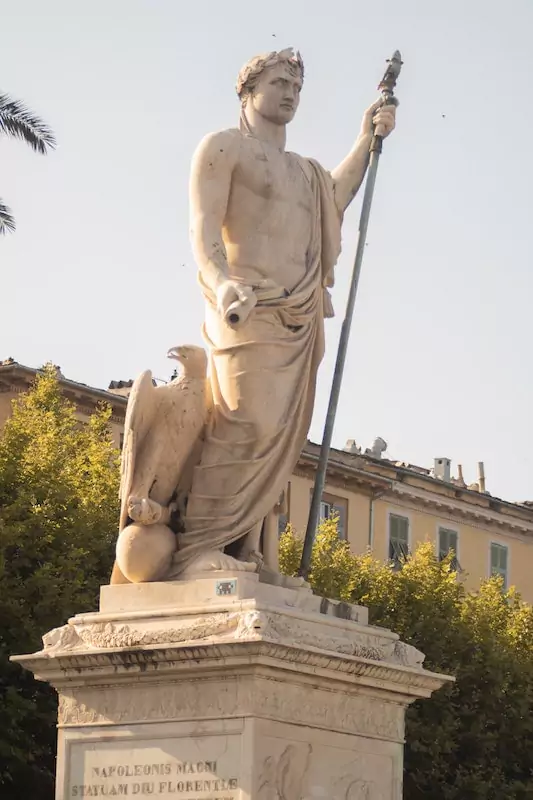
On 14 May the flame crossed to Corsica and covered the island in a single day: Ajaccio, Corte, L'Île-Rousse, Porto-Vecchio, the Aiguilles de Bavella granite needles, and back to Bastia. A visitor needs a week to do the same. Ferries leave from Marseille, Toulon and Nice; book them early for July and August.

Perpignan, Carcassonne and Toulouse, 15 to 17 May
Perpignan's 14th-century Castillet gate and the Palace of the Kings of Majorca set the scene for the 15 May celebrations. The next day the flame entered the Cité de Carcassonne, the walled medieval city listed by UNESCO in 1997; our Carcassonne visitor's guide explains how to see the ramparts before the day-trippers arrive. Toulouse followed, with its brick buildings and the Basilica of Saint-Sernin, listed by UNESCO as part of the Routes of Santiago de Compostela in France.

The Pyrenees and the southwest, 18 to 25 May
From Auch in the Gers, the relay ran along the foot of the Pyrenees to Tarbes and Pau, whose château is the birthplace of Henri IV. It turned north to Périgueux in the Dordogne, then to Bordeaux, Angoulême (home of the international comics festival every January) and the Futuroscope theme park outside Poitiers. Bordeaux is the stop to linger in: our guide to French wine regions explains what to taste there.
The Loire and Normandy, 27 to 31 May
Châteauroux, which hosted the Olympic shooting events, came next, then Angers, whose 13th-century castle holds the 14th-century Tenture de l'Apocalypse wall hangings. If you are following the route, the castle is the reason to stop; our Loire Valley châteaux guide lists the others nearby.

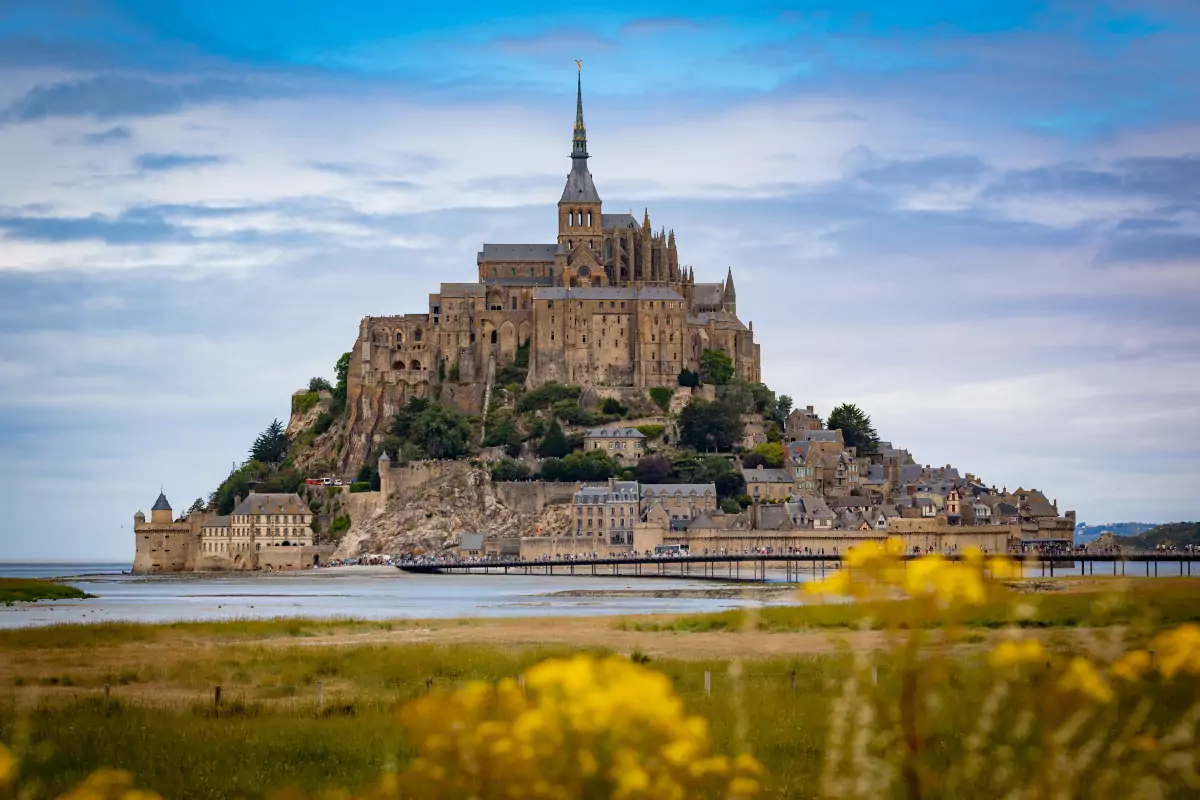
Laval, in the Mayenne, led to Caen, where William the Conqueror built both the château and the Abbaye aux Hommes. The month ended at Mont-Saint-Michel on 31 May, the abbey on its tidal island at the border of Normandy and Brittany. Check the tide tables before you go: our Mont-Saint-Michel guide explains when to cross.

June: Brittany, the overseas territories and the east
Brittany and the Atlantic coast, 1 to 7 June
Rennes opened June, followed by Niort, the beach resorts of Les Sables-d'Olonne and La Baule-Escoublac, and Vannes, whose ramparts still enclose the old town on the Gulf of Morbihan. On 7 June the flame reached Brest, the naval port at the western tip of Brittany.
The overseas territories, 9 to 17 June
The flame then left metropolitan France. In French Guiana on 9 June it passed through Cayenne; the Guiana Space Centre in nearby Kourou is the region's best-known site.

The leg planned for New Caledonia on 11 June was cancelled because of the unrest on the island that spring. The relay continued in Saint-Denis on Réunion on 12 June and in Papeete, Tahiti, on 13 June. French Polynesia had its own Olympic role: the surfing events were held at Teahupo'o, on Tahiti's south coast, some 15,000 kilometres from Paris.

The Caribbean came last: Baie-Mahault in Guadeloupe on 15 June and Fort-de-France, the capital of Martinique, on 17 June. Our post on the French overseas territories explains how they fit into France and how to reach them.

Nice, the Rhône and the Alps, 18 to 23 June
Back on the mainland, the flame ran along the Promenade des Anglais in Nice on 18 June. Nice's stadium was one of the Olympic football venues.

It went on to Avignon and the Palais des Papes, Valence on the Rhône, the spa town of Vichy in the Allier, and Saint-Étienne, a former coal and arms-making city. On 23 June it reached Chamonix-Mont-Blanc, the town that hosted the first Winter Olympics in 1924. Take the Aiguille du Midi cable car early in the morning, before the cloud builds up over the summit.

Alsace, Lorraine and Champagne, 25 to 30 June
Besançon and its Vauban citadel came before Strasbourg, where the cathedral and the canals of the Grande Île are a UNESCO site; our guide to Christmas in Strasbourg covers the city's best season.

Metz, with its Gothic cathedral and its Centre Pompidou outpost, came next, then Saint-Dizier and Verdun, where the 1916 battle killed hundreds of thousands of soldiers; the Douaumont ossuary is a sober, essential visit. June ended in Reims, whose cathedral saw the coronation of most French kings and whose champagne houses offer cellar tours by reservation.

July: the north, the Loire and Paris
From Lille to Troyes, 2 to 13 July
The final loop started in Lille, which hosted the Olympic basketball and handball games, then Lens-Liévin in the old mining basin, Amiens and its cathedral, one of the largest Gothic churches in France, and Le Havre, rebuilt in concrete by Auguste Perret after 1945 and listed by UNESCO for it. Vernon, a few kilometres from Monet's garden at Giverny, preceded Chartres and its medieval stained glass.
On 8 July the flame reached Blois and its château on the Loire, where you can see the four wings built over four centuries from a single courtyard.

Orléans, the city Joan of Arc freed in 1429, followed, then Auxerre in the Yonne, Dijon, the capital of the dukes of Burgundy, and Troyes, whose old town keeps its half-timbered houses.
Paris and the suburbs, 14 to 26 July
On Bastille Day, 14 July, the flame arrived in Paris during the national holiday, and on 15 July it toured the city's arrondissements.

It then went back out through the Île-de-France: Saint-Quentin, Beauvais, Soisy-sous-Montmorency in the Val-d'Oise, Meaux, Créteil, Évry-Courcouronnes, Versailles, where the equestrian events took place in the palace gardens, Nanterre, and La Courneuve in Seine-Saint-Denis. On 26 July, during the opening ceremony, Marie-José Pérec and Teddy Riner lit the cauldron, a ring of fire under a hot-air balloon that rose above the Tuileries Garden every evening of the Games.
Plan your visit
The balloon still flies. As of November 2026, EDF announced that the cauldron rose over the Tuileries from 21 June to 14 September 2026 and will return for one final summer in 2027. If you are in Paris then, go at dusk, when it lifts off from the garden's central basin a short walk from the Louvre.
To follow part of the route yourself, the easiest stretches by train are Marseille to Montpellier along the coast, and Reims, Lille and Amiens in the north, each between 45 minutes and about an hour and a half from Paris by TGV or regional train (check times on SNCF Connect). More itineraries are in our Roam travel guides, and you can download our free France travel guides to plan the stops you want to see.


French and based in Vancouver since 2014, Julien Mainguy is the co-founder of Best of France. Passionate about the cultural difference between Canada and Europe, he is leading numerous projects to create awareness, help people grow, and bring communities together.