

10 French Foods to Try, Morning to Night

"Dis-moi ce que tu manges, je te dirai ce que tu es": tell me what you eat, and I will tell you what you are. Jean Anthelme Brillat-Savarin wrote it in The Physiology of Taste in 1825, and two centuries later it still works as a test of France. The ten foods below follow a French day, from the morning bakery run to dessert, and each one can be found or cooked in Canada.
1. The baguette, protected by law and by UNESCO
A French baguette is meant to be eaten the day it is baked; by evening it is going stale, because a proper one contains nothing to stop it. Since 1993 French law has defined the baguette de tradition: wheat flour, water, salt and yeast or leaven, no additives, never frozen. A shop can only call itself a boulangerie if its bakers knead, shape and bake the bread on the premises, which is why the word on the sign matters; our article on the French boulangerie explains the rules.

In 2022 UNESCO added the artisanal know-how and culture of baguette bread to its intangible cultural heritage list. The recognition covers the craft and the daily ritual of buying it, not a recipe. In Canada, ask your baker for a "tradition"; the good ones will know what you mean.
2. Bœuf bourguignon
Burgundy's beef stew is braised slowly in red wine, traditionally a Burgundy, with onions, carrots, garlic and a bouquet garni, then finished with mushrooms, small onions and lardons (bacon pieces). Many cooks marinate the beef overnight in the wine and serve the stew the next day, when it tastes better. Recipes usually serve six to eight, which is why it is a winter staple of French brasseries and a good Sunday project for a cold Canadian weekend.
3. Brioche
Brioche is bread made rich with eggs and butter, soft inside with a thin, shiny crust. The classic shape is the brioche à tête, a fluted roll with a small ball on top, though it is just as often baked as a loaf. The French eat it at breakfast and as a snack, use it for pain perdu (French toast) and serve it toasted with foie gras.
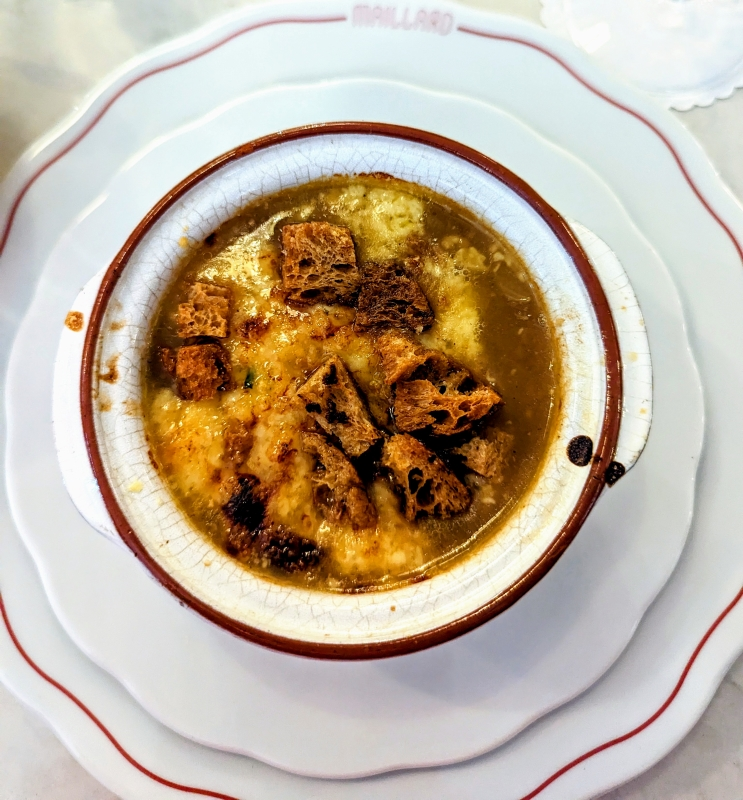
4. French onion soup
Onion soup is what market porters ate at dawn at Les Halles, the old Paris central market. The onions are cooked slowly until their sugars caramelize to deep brown, then simmered in stock. Served as a gratinée, it comes in a bowl topped with bread and grilled cheese, often Comté or Gruyère, and some cooks add a splash of cognac or sherry. Our article on French onion soup covers its history and how to make it.

5. Escargots de Bourgogne
The name refers to a species of snail, Helix pomatia, as much as to a recipe. The snails are purged, cleaned and cooked, then returned to their shells with a stuffing of butter, garlic and parsley and baked until the butter bubbles. They are served six or twelve at a time on a dimpled plate, with tongs and a small fork, and plenty of bread for the butter. Burgundy is the home of the dish, but most snails eaten in France today come from elsewhere in Europe.
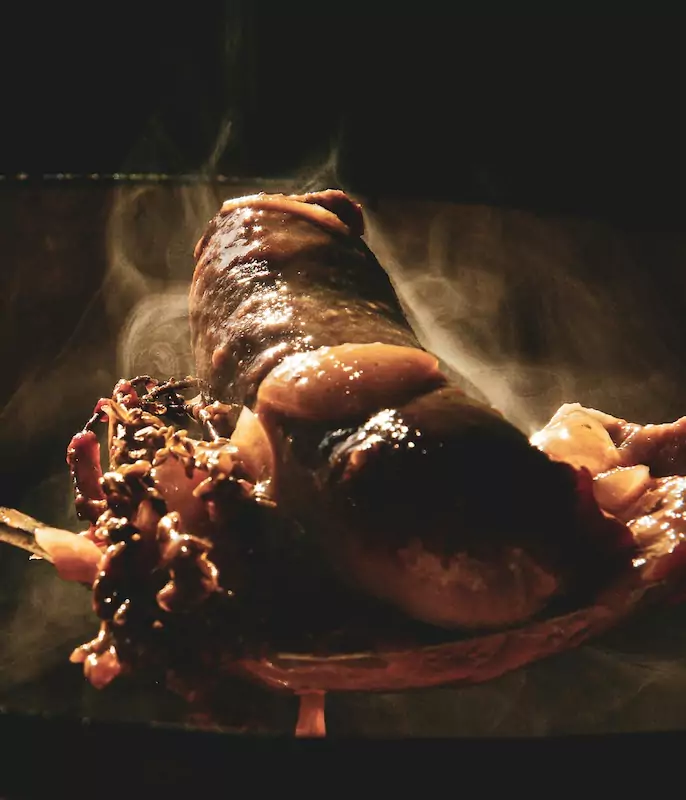
6. Pieds de porc
Pig's trotters are a test of how far you'll go. In France they are usually poached slowly, then breaded and grilled (pieds de porc panés) or boned and stuffed. The Paris brasserie Au Pied de Cochon, near the old Les Halles market, built its name on them. Canadians have a famous version of their own: Au Pied de Cochon in Montréal, Martin Picard's restaurant, where pork and foie gras take Quebec cooking to extremes.
7. Pain au chocolat, or chocolatine
This rectangle of laminated, buttery dough rolled around two bars of dark chocolate is the after-school snack of France. In most of the country it is a pain au chocolat; in the southwest it is a chocolatine, and the argument over the name never ends. Quebec sides with the southwest, so in Montréal you'll ask for a chocolatine.

8. Caramel au beurre salé
Salted-butter caramel comes from Brittany, where salted butter has always been the norm; according to Taste France, the province was exempt from the royal salt tax created in 1343, so local salt went into everything. The modern sweet was created in 1977 by chocolatier Henri Le Roux, who registered his "CBS" caramel as a trademark in 1981. Today it fills crêpes, tops ice cream and comes in jars; see our guide to Brittany's crêpes for the best way to eat it.
9. Cassoulet
Cassoulet takes its name from the cassole, the glazed earthenware dish it is baked in. It is a slow-cooked casserole of white beans with pork, sausage and duck or goose confit, from the Languedoc. Three towns claim the true version, Castelnaudary, Carcassonne and Toulouse, and they disagree about what goes in it. The crust that forms in the oven is stirred back in several times; the more often, the better, say the purists.

10. Chocolate soufflé
A soufflé rises in the oven on whipped egg whites folded into a chocolate base, and starts to fall the moment it comes out, so order it at the start of the meal in a restaurant, because it is made to order. At home, the rules are simple: butter and sugar the dish, fold the whites gently, and keep the oven door shut. Then carry it to the table quickly.
That is the French day, from a baguette at 8 a.m. to a soufflé at 10 p.m. Brillat-Savarin would recognise most of the list, and he would probably say the test is in where you buy it: a real boulangerie, a brasserie that braises its own bourguignon. Start with the baguette this weekend. For more dishes and the stories behind them, browse our Taste guides, and the Best of France newsletter sends new recipes and food stories to your inbox.

French and based in Vancouver since 2014, Julien Mainguy is the co-founder of Best of France. Passionate about the cultural difference between Canada and Europe, he is leading numerous projects to create awareness, help people grow, and bring communities together.