
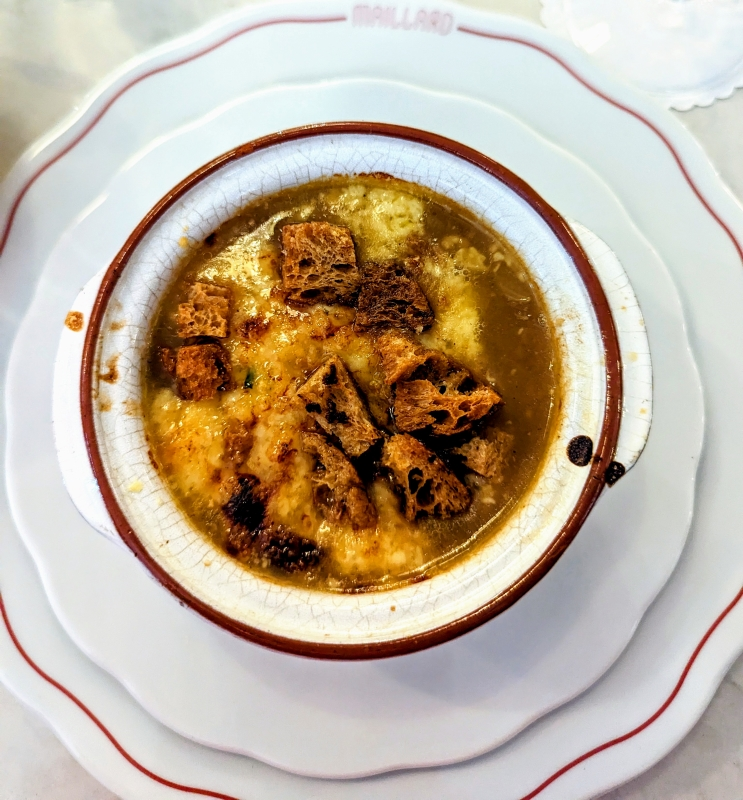

French Onion Soup: History and Recipe



In Paris, onion soup was a night dish long before it was a tourist one. For more than a century, market porters at Les Halles, the city's central food market, and the revellers who ended their night beside them, ate bowls of soupe à l'oignon gratinée in the surrounding cafés before dawn: onions cooked down until brown, beef stock, a slice of bread and a lid of melted cheese. The market moved out of central Paris in 1969, but the soup stayed on brasserie menus. Here is where it comes from, what makes it good, and how to make it at home.

From poor food to brasserie classic
Onion soup is old and simple: onions were cheap, kept through the winter and grew everywhere, so a soup of onions, fat, water or broth and stale bread fed people across Europe for centuries. Two stories try to give it a royal origin. In one, Louis XV, hungry at night in his hunting lodge, cooked onions in butter with champagne. In the other, Stanislas Leszczyński, Duke of Lorraine and Louis XV's father-in-law, tasted it at an inn in Champagne and had the recipe sent to his court. Both are legends, and neither can be proven.
The version we know, with a crust of grilled cheese, belongs to 19th and 20th-century Paris and the cafés around Les Halles. Because it was eaten at the end of long nights, it picked up a nickname, soupe d'ivrogne, drunkard's soup, and a reputation as a hangover cure. Today the French rarely make it on a weeknight; it is something you order in a brasserie in winter, or make at home for a late supper after a party.

Four choices that decide the result
Onions: brown them slowly
Use yellow onions and give them time. They need about 45 minutes in all to go from pale to deep amber, and that colour is the soup's flavour. A pinch of sugar helps; turning up the heat burns the edges before the middle softens.
Stock: beef, or half beef and half chicken
Traditionally the soup is made with beef stock. A mix of beef and chicken gives a lighter result. If you use boxed stock, taste it on its own first: whatever it tastes like, the soup will taste more so. Homemade stock from leftover roast bones costs almost nothing.
Wine: dry and white
A dry white wine deglazes the pot. A Jura white from Arbois, with its nutty edge, suits the cheese; an Alsace pinot blanc is softer. Ask for either at your provincial liquor store; selection varies by branch. A splash of cognac at the end adds depth.
Cheese: Comté or Gruyère
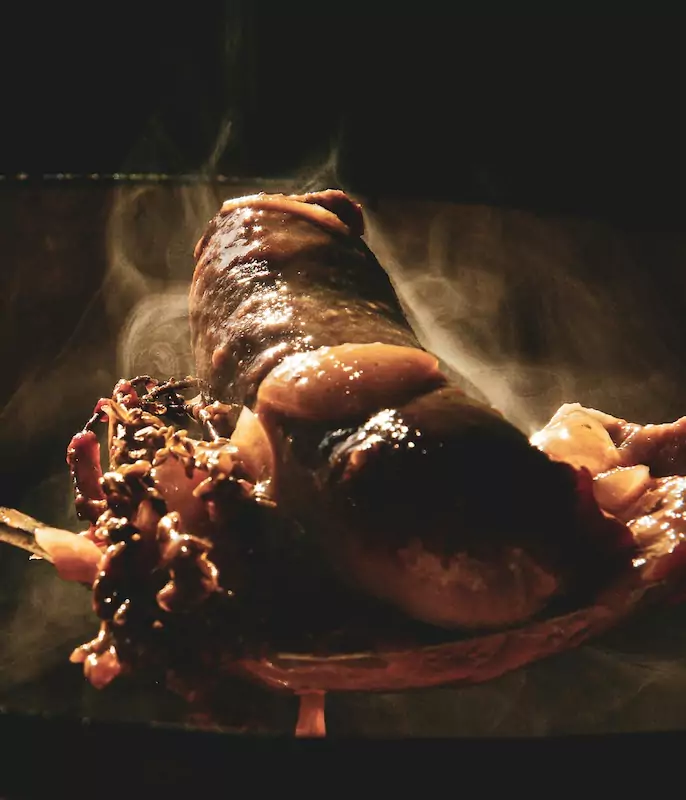
You need a cheese that melts and browns without turning oily. Comté, from the Jura, has the most flavour; Gruyère from Switzerland is the classic alternative. In the north of France some families top it with Maroilles, a strong washed-rind cheese, as in the photo above. Buy it in a block from a cheese counter and grate it yourself.
The recipe: soupe à l'oignon gratinée
Preparation 20 minutes, cooking about 1 hour 20 minutes. Serves 4 to 6. You will need ovenproof bowls for the final step.
For the soup
- 5 large yellow onions
- 6 tablespoons butter
- 1 teaspoon sugar
- 1 teaspoon balsamic vinegar (optional)
- 2 garlic cloves, minced
- ½ cup dry white wine
- 4 cups beef stock
- 4 cups chicken stock
- 1 tablespoon fresh thyme leaves
- 3 bay leaves
- 2 tablespoons cognac
- Salt, pepper and a pinch of nutmeg
For the topping
- 8 or more thin slices of baguette
- Olive oil
- 1 garlic clove, halved
- 2 cups grated Comté or Gruyère
- Grated Parmesan (optional)
Method
- Slice the onions: peel and slice them thinly.
- Soften them: in a heavy 5 to 6 litre pot such as an enamelled cast-iron casserole, melt 3 tablespoons of butter over medium heat. Add the onions, toss to coat and cook, stirring, until translucent, about 15 minutes. Add the sugar and the balsamic vinegar.
- Brown them: add the rest of the butter and a pinch of salt, raise the heat to medium-high and cook, stirring often, until the onions are deep brown, 30 minutes or more.
- Add the garlic and cook 2 minutes.
- Deglaze: pour in the wine and scrape up the browned bits from the bottom of the pot.
- Simmer: add both stocks, the thyme and the bay leaves. Bring to a simmer, cover, lower the heat and cook gently for 30 minutes. Season with salt, pepper and nutmeg.
- Remove the bay leaves and stir in the cognac.
- Toast the bread: while the soup simmers, fry the baguette slices in olive oil until golden, or bake them for 3 to 5 minutes at 450°F (230°C). Rub them with the cut garlic.
- Gratinée: ladle the soup into ovenproof bowls on a baking sheet, float the toasts on top, cover generously with cheese and add a little Parmesan. Put the bowls under the broiler for 3 to 5 minutes, until the cheese bubbles and browns. Serve at once, warning everyone that the bowls are hot.

Where to order it in Paris
Onion soup is a brasserie classic, most often on the menu from autumn to spring. Au Pied de Cochon, at 6 rue Coquillière next to the old Les Halles, is the address most linked to the market tradition, and as of November 2026 its website lists service from 8 am to 5 am every day. For a cheaper bowl, the bouillons, Paris's revived workers' canteens, are worth a look: Bouillon Pigalle serves from noon to midnight daily. Menus change with the seasons, so check before you go.
The soup is best the way the porters ate it: late, after a long day, with bread and cheese doing most of the work. Our introduction to French gastronomy explains where dishes like this fit, and our easy savoury French recipes give you more to cook this winter. More regional dishes are in our Taste guides, and our free newsletter brings a new recipe to your inbox.

French and based in Vancouver since 2014, Julien Mainguy is the co-founder of Best of France. Passionate about the cultural difference between Canada and Europe, he is leading numerous projects to create awareness, help people grow, and bring communities together.