



Since 1966, a three-kilometre viaduct has carried the road from Bourcefranc-le-Chapus onto the Île d'Oléron, and since 1991 it has been free to cross. That one fact explains the island's character. Its neighbour, the Île de Ré, still charges drivers to cross its bridge; Oléron dropped its toll and stayed a family holiday island: campsites in the pines, oyster shacks on the ports, bicycles on every road. It is the largest island on France's Atlantic coast, in Charente-Maritime, about two hours' drive north of Bordeaux, and it rewards a week far more than a day.
Getting there: bridge, bus or summer boat
There is no train on the island. According to the Oléron tourist office, the nearest stations are La Rochelle, Rochefort and Surgères (about three hours from Paris to Surgères by direct train), with regional coaches on to Saint-Pierre-d'Oléron and Saint-Denis-d'Oléron. The best crossing is by water: seasonal fast boats from La Rochelle reach Boyardville in about 50 minutes, running from April to the end of September (as of November 2026; check the tourist office page before booking). A car is the easiest way to arrive, but once there a bicycle does most of the work.

Fort Boyard and the citadel at Le Château-d'Oléron
Oléron guarded the mouth of the Charente and the naval arsenal at Rochefort, and its forts show it. Work on the citadel of Le Château-d'Oléron began in 1630 under Richelieu on the remains of a medieval castle, and the citadel and its grid-plan town were completed under Vauban's orders in 1700. The ramparts are free to visit every day of the year, and from them you look straight across to the oyster beds and the mainland.

Offshore between Oléron and the Île d'Aix sits Fort Boyard, the stone oval most French viewers know from the television game show filmed inside it. You can't land, but boat trips from Boyardville circle it, and you can see it from the beaches near the village. The Île d'Aix, where Napoléon spent his last days in France in 1815, is a short boat trip away for a second island in the same week.
Beaches on the wild side and the calm side
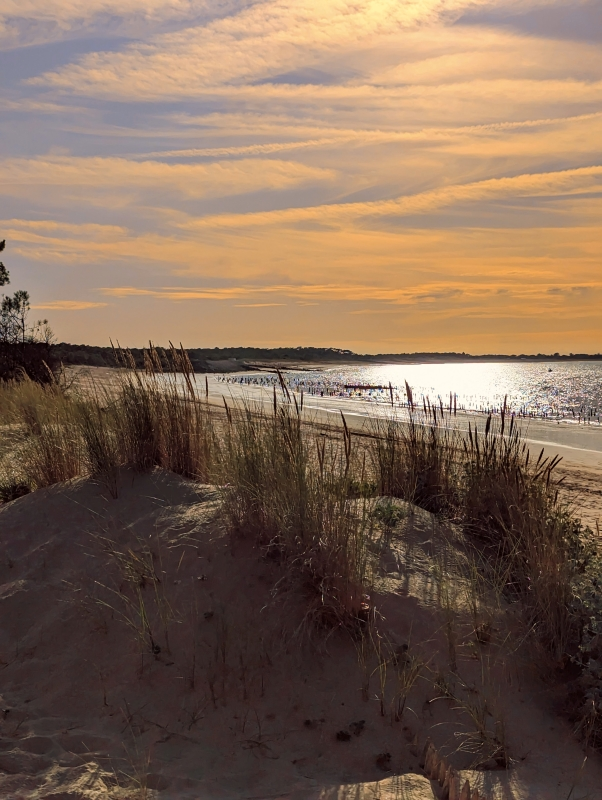
The island has two coasts. The west faces the open Atlantic, with long beaches, surf and strong currents; the east faces the sheltered strait, with calmer water for children. On the east side, Plage des Saumonards near Boyardville runs for kilometres behind dunes and pine forest, and the smaller La Nouette is about a ten-minute walk through the woods. Our roundup of the best French beaches compares Oléron's with the rest of the coast.

At the southern tip, Saint-Trojan-les-Bains has a seasonal tourist train that runs through the forest to the dunes at Maumusson. On the Atlantic side, swim only at beaches with lifeguards in summer: the currents off the Côte Sauvage are a real danger.
Ports, artists' cabins and the salt marsh road
La Cotinière, on the west coast, is the island's main fishing port, and the morning fish auction sets the tone for the restaurants around the harbour. At Le Château-d'Oléron, the old oyster huts along the port have been painted in bright colours and turned into artists' cabins, where painters, potters and jewellers work and sell. The island's tourist office has the current opening season for them.

Inland, the roads run between oyster ponds and salt marshes, the marais where sauniers (salt workers) still rake salt by hand in summer. Buy it from the producers' huts by the road, plain or mixed with herbs for fish. Further along the shore toward Dolus, the Baudissière port is one of the oyster villages where you can eat at the producer's table.

What to eat: mussels, oysters and pineau
Mussels are the everyday dish. Moules marinières are cooked with white wine, shallots and parsley and served with fries; the local version is mouclade, mussels in a cream sauce spiced with curry. For something only this coast does, look for éclade, mussels arranged on a plank and roasted under burning pine needles.

Oysters come from the Marennes-Oléron basin, the waters between the island and the mainland. Gillardeau, one of the best-known French oyster names, is based in Bourcefranc-le-Chapus at the mainland end of the bridge. The best way to eat them is at an oyster shack on the port, straight from the producer, with bread, butter and a glass of white wine.

To drink, order pineau des Charentes, a sweet aperitif made by blending grape must with cognac and ageing it in oak; it comes white, rosé or red. The island has its own producers, such as the Maxime Pinard estate in La Brée-les-Bains, which makes its pineau and cognac on the island. Serve it chilled before dinner.


Charentais sweets to look for
The bakeries sell three regional classics. The galette charentaise is a butter shortbread flavoured with cognac or angelica. The tourteau fromagé is a round goat-cheese cake whose top bakes almost black, eaten as a dessert or a snack. The jésuite is a triangle of puff pastry filled with frangipane and topped with almonds.


In Saint-Pierre-d'Oléron, the island's main town, Au Puits d'Amour is a good place to try them. The covered and open-air markets add goat cheese, honey, charcuterie and donkey-milk soap. For more on how the regions of France eat, see our guide to French gastronomy.

Plan your visit
- Getting around: the island is flat and laced with cycle paths through forest and marsh, so rent a bike for the week; you need a car only to arrive.
- Nature: the Moëze-Oléron National Nature Reserve is a stopover for migrating birds on the Atlantic flyway; spring and autumn are the best seasons to watch them.
- When to go: June and September, when the water is warm enough to swim and the bridge traffic is light. In July and August, cross the viaduct early in the morning.
- Where to stay: Saint-Pierre-d'Oléron for shops and markets, Boyardville for the calm beaches and the boat to La Rochelle, Saint-Trojan for the forest.
- Information: the Île d'Oléron and Marennes tourist office.

Cross the bridge, put the car away and let the island set the pace: a plate of oysters on the port at Le Château, a ride through the pines to the beach, a glass of pineau at sunset. For the islands next door, read our guide to the Île de Ré, browse more coastal trips in our Roam travel guides, and plan the rest of your route with our free France travel guides.

French and based in Vancouver since 2014, Julien Mainguy is the co-founder of Best of France. Passionate about the cultural difference between Canada and Europe, he is leading numerous projects to create awareness, help people grow, and bring communities together.